ServicesPaint Protection Film
Paint Protection Film (Clear Bra) in Alta Sierra
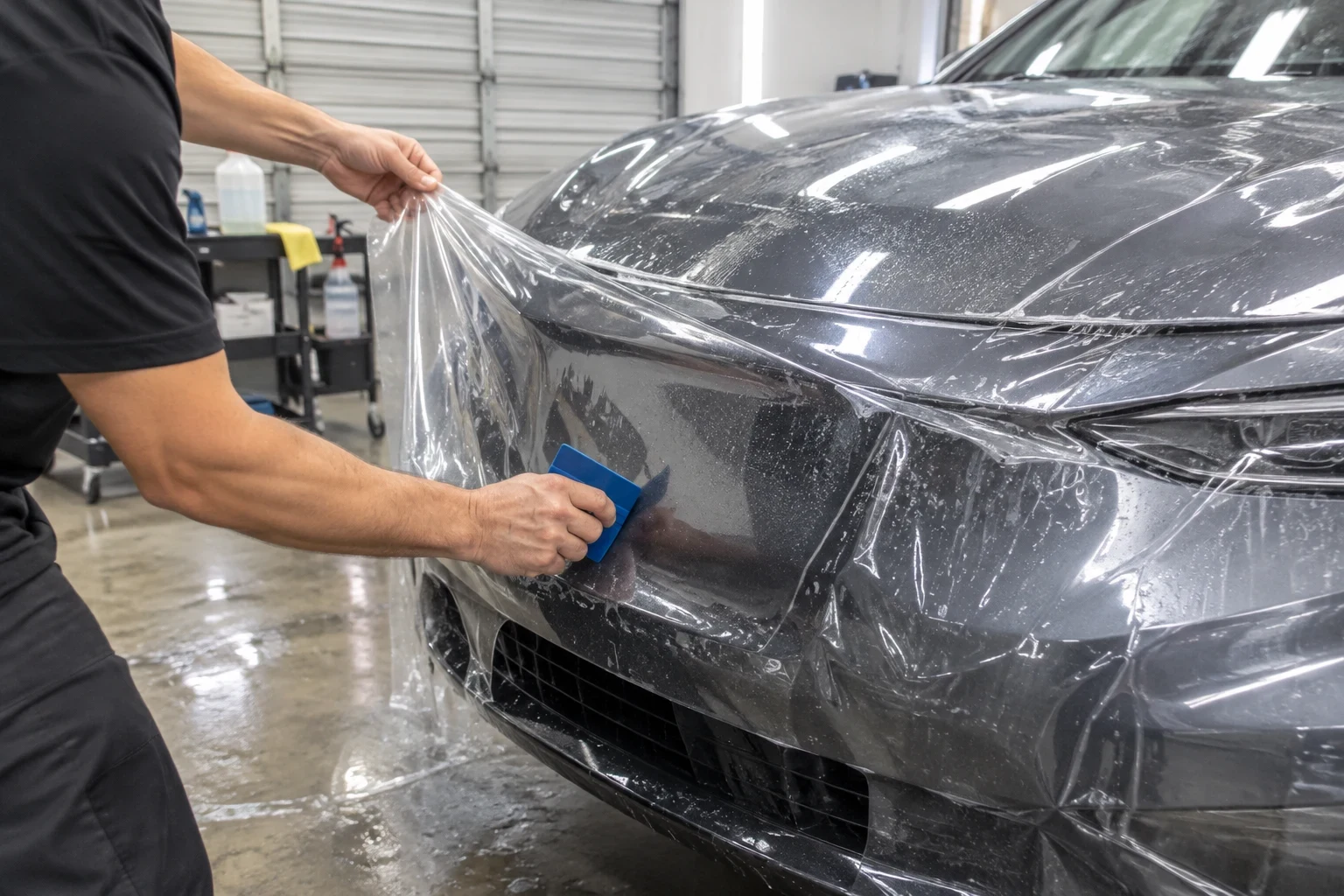
Paint protection film is a clear urethane skin that takes the hits from rock chips, sand and bug acid so your paint does not. We apply it at our shop over clean, corrected paint, wrapping edges where the panel shape lets us and using film only where California rules allow.
How paint protection film protects your paint
Many people call it clear bra. It is thermoplastic urethane about eight mils thick with a self-healing top layer, so light swirls and scuffs disappear with warmth from the sun or warm water. A stone that would usually chip through clear coat to primer tends to leave only a faint mark on the film.
It does the most good on a new car or freshly corrected paint, before the front end picks up its first chips. Foothill roads bring gravel shoulders and winter sand, and most of that hits the bumper, the leading edge of the hood and the mirrors.
Our shop has been open 6 years, and your film goes on by the hands of our lead installer, who has 15 years of experience. You can see it in the small things: tucked edges, corners that lie flat, and neat film around sensors and badges with no stretch marks.
What a film install includes
Wash and decontamination
Every car gets a full wash, iron removal and clay treatment. Film locks in whatever is under it, so the surface has to be clean down to the clear coat.
Paint correction where needed
If there are swirls or light scratches on the panels being covered, we talk with you about polishing them first. Film over a defect magnifies it slightly, so we would rather fix it than hide it.
Precut or custom-trimmed film
We use patterns matched to your make and model, then adjust by hand around sensors, washer jets and badges. Where the panel shape allows, edges are wrapped under so the line all but disappears.
Lights handled within the rules
Headlights get clear film only. Smoked or tinted film over lamps can conflict with California vehicle lighting rules, so we explain what is allowed before we cut anything.
Cure check and aftercare
Before you pick up, we inspect each panel under shop lighting, then walk you through washing and the first-week cure. Small moisture spots can show for a few days and clear on their own.
Signs your car is ready for paint protection film
- You just took delivery
- Factory paint is at its best on day one. Film applied now keeps it that way instead of covering chips later.
- The bumper already shows pinpoint chips
- Small white dots along the bumper and hood edge are the start. A touch-up and film stops the count from climbing.
- You drive gravel or highway miles
- Trucks, loose shoulders and winter sand throw debris at the front end every trip.
- Door edges and cups are scuffed
- Rings, keys and fingernails mark the area around the handles. Small film pieces there are inexpensive and effective.
- You plan to keep or sell the car well
- Original paint with no chips holds value better than a repainted bumper.
From first call to pickup
- 1
A phone consultation first
On the call, we go over your car, the miles you put on it and the coverage that suits it, anywhere from a partial front to the whole vehicle. You leave the conversation with a clear quote before the car ever comes in.
- 2
Drop-off and surface prep
Bring the car to our shop on the agreed day. It gets washed and decontaminated, and any panels we agreed to polish are corrected before film touches them.
- 3
Laying the film
Each panel is wetted with slip solution, the film is set in place and squeegeed out, then edges are wrapped and trimmed by hand. A front-end package usually needs a full day, and bigger coverage needs more time.
- 4
Final check and handover
Every edge is examined under bright shop lights. We keep the car inside until it is ready to leave, then explain the cure period and how to care for the film.
What sets the price of paint protection film
We price film by the coverage and the labor involved, not by what the car cost. After the phone consultation you get a written quote, so the price is clear before you drop off the car.
- How much of the car you cover
- Partial hood and fenders is the least, a full front costs more, and full-body coverage costs the most.
- Panel shape and size
- Deep bumper vents, sharp creases and many sensors mean more trimming and more hours.
- Paint condition
- If the paint needs correcting before film, the polishing time is added to the job.
- Film choice
- Gloss and matte films are priced differently, and matte is the better match for satin paint.
- Removing old film
- Old film from another shop that has yellowed or failed must be removed with care first, and cleaning off its adhesive adds labor.
Paint protection film questions
- Does paint protection film come with a warranty?
- Yes. The film we install is backed by a 10-year manufacturer warranty on PPF. That coverage is for faults in the film itself, like yellowing, cracking or bubbling. We go over the details with you during the consultation so nothing is left vague.
- Is clear bra on headlights legal in California?
- Clear film on the headlight lenses is a routine install, and it keeps the plastic from pitting and clouding. Smoked or tinted film is another story, because California lighting rules restrict anything that alters the color or brightness of a lamp. On lights, we install clear film and nothing else.
- Can the film pull paint off if I remove it later?
- Original factory paint in sound shape releases film cleanly when it is warmed and peeled slowly. The risk sits with resprayed panels, where a weak bond between paint layers can let paint lift along with the film. That is the reason we look over the paint before any film goes on.
- Can ceramic coating go on top of the film?
- It can, and it is a popular pairing. Coating the film helps it bead water and release road grime, so washing takes less effort. If you like, we can coat the filmed panels and the bare paint during the same visit.
- When can I wash the car after install?
- Give the adhesive about a week to set before the first wash. From then on, regular hand washing is fine. Just keep a pressure washer nozzle from aiming directly at the film edges.
Stop chips before they reach the paint
Describe your car and the driving you do. We will suggest the right coverage and quote it before the car comes to our shop.