ServicesWindow Tint
Car Window Tint in Alta Sierra
Our carbon and ceramic tints keep the cabin cooler, stop UV and stay inside California's limits for every window. Before any film goes on, we tell you clearly what your car can legally have, then finish the glass cleanly from edge to edge.
Darker, cooler windows that stay within the law
Window tint is a thin layer of film fitted to the inside face of the glass. A quality film stops a large share of solar heat and nearly all UV, tones down glare, and slows the fading and cracking of seats and dash. How a film is built decides how it performs. Dyed film darkens the glass but fades and goes purple with age. Carbon film keeps its color and stops more heat. Ceramic film stops the most heat without having to be dark, and it leaves phone and GPS signals alone.
Each window has its own rule in California. The front side windows have to pass at least 70 percent of light, with glass and film measured as one. The windshield is limited to a non-reflective band across the top four inches. The rear side windows and back glass may go darker when the car has working mirrors on both sides. Plenty of factory glass already carries a slight tint, so we take a reading on yours before suggesting any film for the front.
Six years of running this shop taught us to take the reading first and cut second. Every job is led by an installer with 15 years of film work, on cars from older sedans to new trucks. Customers from Grass Valley, Auburn and Lake Wildwood tend to ask for the same thing: clean-looking tint from the curb that never draws a fix-it ticket.
What a tint job includes
A light reading on your glass
Before anything is cut, we meter how much light your current glass passes. That reading shows which films will keep the front side windows at or above 70 percent combined.
Film choice explained plainly
You see carbon and ceramic samples next to each other, and we explain how each one handles heat and how it holds up over the years. The rear shade is your call; up front, we tell you what California allows.
Computer-cut patterns
A plotter cuts the film from patterns built for your make and model. No blade touches your glass, and the edges sit tight and even along the dot matrix and window seals.
Heat-formed rear glass
Curved back windows get film that is shrunk to their shape with a heat gun first. It then lies flat rather than creasing or lifting at the corners.
Old film removal when needed
Faded or bubbling tint is steamed and peeled, then the leftover adhesive is cleaned away. On the back glass we take care around the defroster lines so they keep working.
Aftercare at pickup
At handoff we explain how many days the windows should stay rolled up, and why a faint haze in the first few days is normal and clears on its own.
Signs it is time for new window tint
Purple or faded film
Older dyed film breaks down in sunlight and shifts toward purple. It is no longer blocking much heat by then.
Bubbles and peeling edges
Bubbles mean the adhesive has failed. They tend to spread, and they make the glass hard to see through at night.
A fix-it ticket for dark front windows
If a previous owner or another shop put dark film on the front sides, we can remove it and install a legal film so you can get the correction signed off.
A cabin that bakes in the sun
Foothill summers can push interior temperatures high enough to make the steering wheel hard to hold. Ceramic film takes a real share of that heat off the glass.
Fading seats and a cracking dash
UV is what dries out leather and plastic. Film slows that damage on a car you plan to keep for years.
Your tint appointment, step by step
- 1
A quick phone call
Tell us your car, the windows you want done and whether old film has to come off, and we set aside the right amount of time.
- 2
Drop-off and a light reading
When you arrive, we walk around the car with you, measure the light passing through the front glass and pick the film together.
- 3
Clean, cut and install
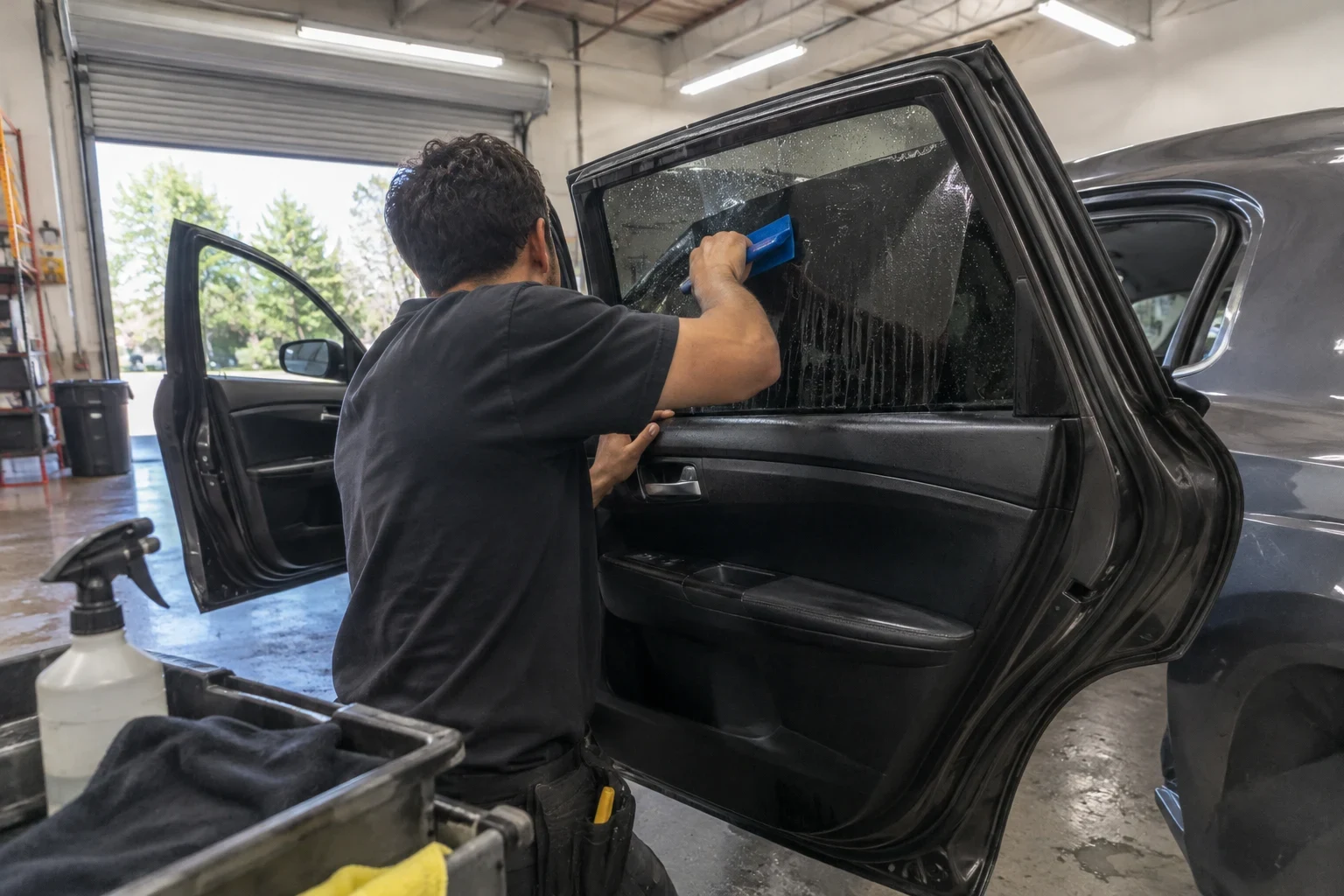
Each window is scrubbed clean of grit, the film is cut on the plotter, and we squeegee it into place from the inside. Door panels and electronics stay covered from start to finish.
- 4
Edge-by-edge check
We look over every edge under strong light for dust or lifting corners before we call the car done.
- 5
Letting it cure
Keep the windows rolled up for a few days. A light haze or small water pockets are expected while the moisture dries out, and warm days make that go faster.
What affects your window tint price
Once we know your car and which windows you want done, we quote by phone and confirm the price when you check in. These are the main things that change it.
- Film type
- Ceramic costs more than carbon because of its materials and how much heat it keeps out.
- Number and shape of windows
- A two-door coupe has less glass than an SUV with small quarter windows, and sharply curved back glass takes longer to heat-form.
- Removing old tint
- Taking off failed film and its glue takes slow, careful work, most of all around defroster lines.
- Windshield strip
- The legal strip across the top of the windshield is its own piece of film and adds to the job.
Window tint questions
Something not covered here? (530) 255-9957
What is the darkest legal tint for front windows in California?
Front side windows must pass at least 70 percent of light with the glass and film counted together. A lot of factory glass is already close to that, so we measure before choosing. A light ceramic film can still block a fair amount of heat without visibly darkening the windows.
Is there a limit on how dark my rear windows can be?
California lets the rear side windows and back glass go darker, as long as the car has outside mirrors on both sides. We still help you pick a shade that is easy to see through after dark.
Should I pay more for ceramic instead of carbon?
If heat bothers you most, ceramic is usually the better pick. It blocks more heat at the same shade, which counts most on the front windows where the law keeps film light. Carbon works well if privacy and a cleaner look are your main goals.
How long do you need my car?
A typical full tint takes part of a day. Stripping old film adds to that, and we tell you on the call how much time to set aside.
Can my car get tint if it already has paint protection film or ceramic coating?
Yes. Tint is applied to the inside of the glass, so it has no effect on film or coating on the paint. Many drivers get tint and windshield protection film done in one visit.
Get tint that looks right and passes a roadside check
Tell us your car and which windows you want done. We will explain what California allows and which film fits how you drive.