ServicesWindshield Protection Film
Windshield Protection Film in Alta Sierra
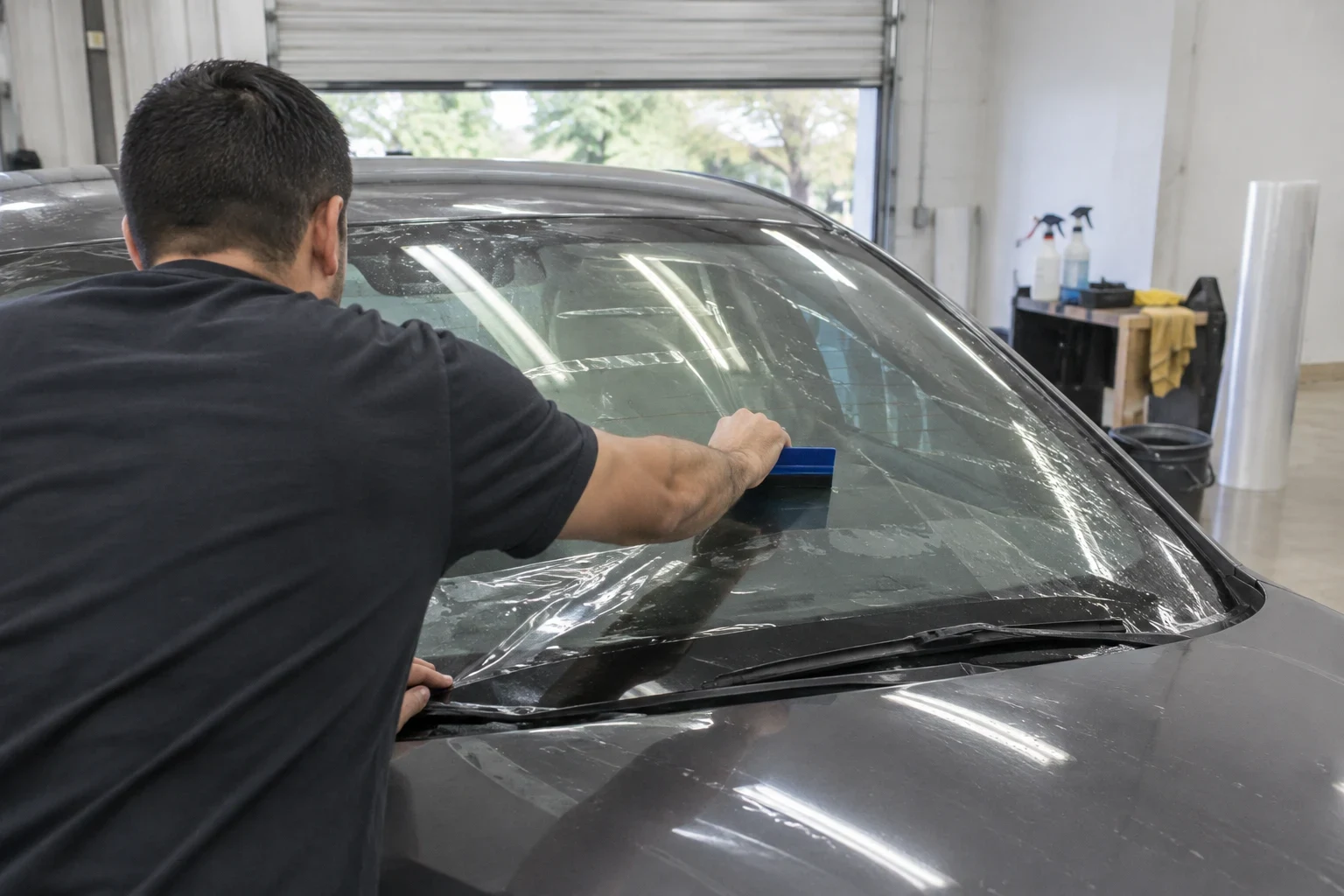
We install a thin, optically clear film over the outside of your windshield that absorbs rock strikes and sand pitting. You keep a clear view, the glass underneath stays intact, and we explain what California allows on a windshield before any film goes on.
A clear layer that takes the hits instead of the glass
Windshield protection film is a sacrificial layer. It is a clear, flexible film made for glass, applied to the outside of the windshield where gravel and grit actually land. When a stone strikes, the film flexes and spreads the impact. When it gets worn or scuffed after enough miles, we remove it and install a fresh piece. Replacing film is simpler than replacing a windshield.
That matters more than it used to. Many newer windshields carry lane-keeping cameras, rain sensors and heated wiper areas, and replacing one often means a camera recalibration on top of the glass. Keeping the original windshield sound avoids that whole chain of work.
This is a different product from the window tint on your side glass and from the paint protection film we install on paint. It is built to stay optically clear, so it does not darken the cabin or change how the road looks through the glass.
What the install includes
Glass inspection first
We look over the windshield under good light and note any existing chips, cracks or pitting. Film should not go over an open chip, so we will tell you if a glass repair should come first.
A plain answer on California rules
California's vehicle code limits what can be applied to a windshield, and tinted film is restricted to a narrow strip across the top. We install clear film only, explain what the rules allow for your car and go over any documentation the film maker provides.
Deep cleaning and decontamination
The glass is washed, clayed and wiped down so no grit or residue gets trapped under the film. Clean glass is what keeps the finished install clear.
Precision fit around sensors
Each piece is cut and shaped to your windshield's curve. We check the camera and sensor area and keep the install clear of anything that needs an unobstructed view.
Heat forming and edge finishing
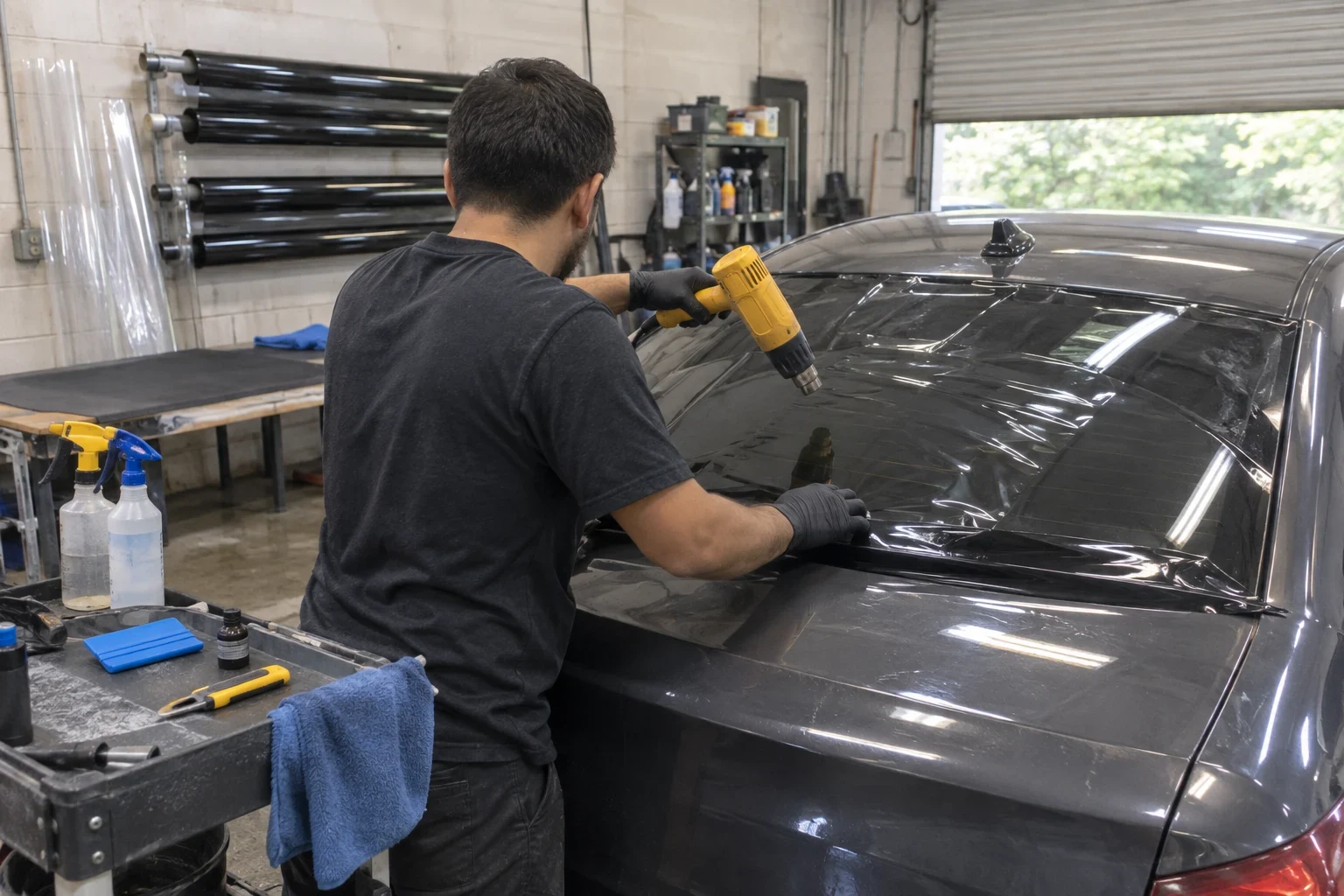
The film is formed to the glass with controlled heat and squeegeed out by hand. Edges are finished tight so wipers ride smoothly over them.
Final check and care notes
Before you pick up, we inspect the windshield from the driver's seat and from outside. You leave with simple care instructions for the first days while the film cures.
Signs your windshield could use protection
- You keep getting chips
- If you have repaired more than one chip in a year, the glass is clearly in the line of fire. Film reduces how many strikes make it to the glass.
- You just replaced the windshield
- A brand new windshield is the best time to protect it, before the first pit or star appears. On a camera-equipped car, the replacement and recalibration were likely a real expense.
- Your drive includes highway miles
- Following trucks on Highway 49 or I-80 throws gravel at windshield height. Winter road sanding toward the mountains adds more.
- The glass looks hazy in low sun
- Fine sandblast pitting scatters light and causes glare at sunrise and sunset. Film cannot undo pitting that already exists, but it keeps a fresh or clean windshield from getting that way.
- You are taking delivery of a new car
- Many owners protect the windshield along with the front of the car. We can pair it with paint protection film on the hood and bumper in the same visit.
How your windshield film day runs
- 1
A call to plan it
We go over your car, your driving and what California permits on a windshield. You get a quote for your vehicle and a time to bring it to our shop.
- 2
Check-in and glass review
You drop the car at our shop and we look over the glass with you. If a chip needs repair first, you hear it from us before anything starts.
- 3
Cleaning and fitting
We clean and decontaminate the windshield, then cut the film, float it on with slip solution and heat form it to the curve. Our lead installer brings 15 years of experience fitting film to curved glass.
- 4
Drying and handback
The car stays indoors while the moisture starts to dry, and we inspect it one last time before returning the keys. Plan on most of a day for the visit and a few days of light haze while it finishes curing.
What changes the price
We price windshield film car by car rather than from a set menu. The glass size and shape, the film you pick and the equipment behind the windshield all change the labor. Once we know the car, we give you the figure by phone.
- Glass size and curve
- A sharply raked or wraparound windshield uses more film and takes longer to form than a flat, upright one.
- Which film you pick
- Thicker films soak up harder hits, and some carry coatings that help water bead away. We explain how they trade off clarity and durability before you decide.
- Cameras and sensors
- Glass with camera housings, rain sensors or heated zones calls for slower, more careful cutting and fitting in those spots.
- State of the glass
- Chips already in the glass may need repair before the install, and heavy pitting can limit how clear the finished windshield looks.
Windshield film questions
- Is windshield protection film legal in California?
- California restricts tinted material on a windshield to a strip across the top, and we never install tinted film on the main viewing area. Windshield protection film is clear and made to keep visibility intact. We explain the rules for your car during the consultation so you know exactly what is going on the glass and why.
- Will it cause glare or distortion at night?
- A properly installed optical-grade film should look like clean glass from the driver's seat. Cheap films and dirty installs are what cause haze and streaks. We inspect for distortion before you pick up the car.
- Can I use my wipers and defroster normally?
- Yes, once the film has cured. Replace worn wiper blades, since a damaged blade can scuff the film the same way it would scratch glass. In cold weather, use the defroster rather than a hard ice scraper.
- Will it interfere with my lane camera or rain sensor?
- We check the camera and sensor area on every car before cutting and keep the install clear of anything that needs an unobstructed view. If your car has a setup we have concerns about, we tell you during the consultation rather than after the install.
- How long does it last, and is it covered by the same warranty as paint film?
- Windshield film is sacrificial, so it is replaced when it gets worn or chipped, and how long that takes depends on your miles and roads. The 10-year manufacturer warranty we offer applies to paint protection film on painted surfaces, not to windshield film. We go over what to expect from the windshield product on the phone.
Hold on to your factory windshield
For 6 years we have installed film at our shop for drivers from Alta Sierra out to Grass Valley and Auburn. Describe your car and we will take you through the film, the rules and your quote.